The Screen That Survived Everything
101 Years of Reinventing Cinema at the Alex Theatre
On September 4, 1925, searchlights swept across the sky above Glendale, California. More than 2,000 people packed into a spectacular new movie palace called the Alexander Theatre. The crowd was so large it spilled into the street. There was an orchestra, vaudeville, a massive Wurlitzer pipe organ, movie stars and even Rin-Tin-Tin. On the screen that evening was the world premiere of a silent movie directed by John Ford called Lightnin’.
Think about that for a second. Silent.
The Alex Theatre was born before movies could reliably talk. And 101 years later, on October 7 and 8, 2026, filmmakers from around the world will walk into that same theater carrying movies made with artificial intelligence.
That isn’t irony. That’s cinema.
We've been hearing a lot lately about the existential threat AI poses to filmmaking. I understand the anxiety. But walk into the Alex Theatre and look around. That building has heard this argument before. Many times.
Movies were silent when the theater opened. Then they talked. Then they turned to color. Screens got wider. Sound surrounded us. Cameras became lighter. Film stocks improved. Visual effects went optical, then digital. Editors traded Moviolas for computers. Film gave way to digital cameras. CGI created things cameras couldn't photograph. Performance capture turned actors into creatures. Virtual production put entire worlds onto LED walls. And now generative AI can create images that were never photographed at all.
Every one of those transitions disrupted somebody. Every one frightened somebody. Every one changed what it meant to make a movie. Yet somehow the movie survived.
More importantly, storytelling survived.
The Alex wasn't merely showing movies during those years. Hollywood used it to figure out whether movies worked. By the 1930s, the major studios had discovered something valuable about Glendale: its audiences were a pretty good proxy for America. So the Alex became a major preview house. Studios brought unfinished films there, watched the audience, collected reaction cards and sometimes went back to rewrite or re-edit what audiences had just seen.
Imagine the filmmakers standing nervously in the back of the theater. No Rotten Tomatoes. No social media. No algorithmic sentiment analysis. Just 2,000 people sitting in the dark. Their laughter told you something. Their silence told you more.
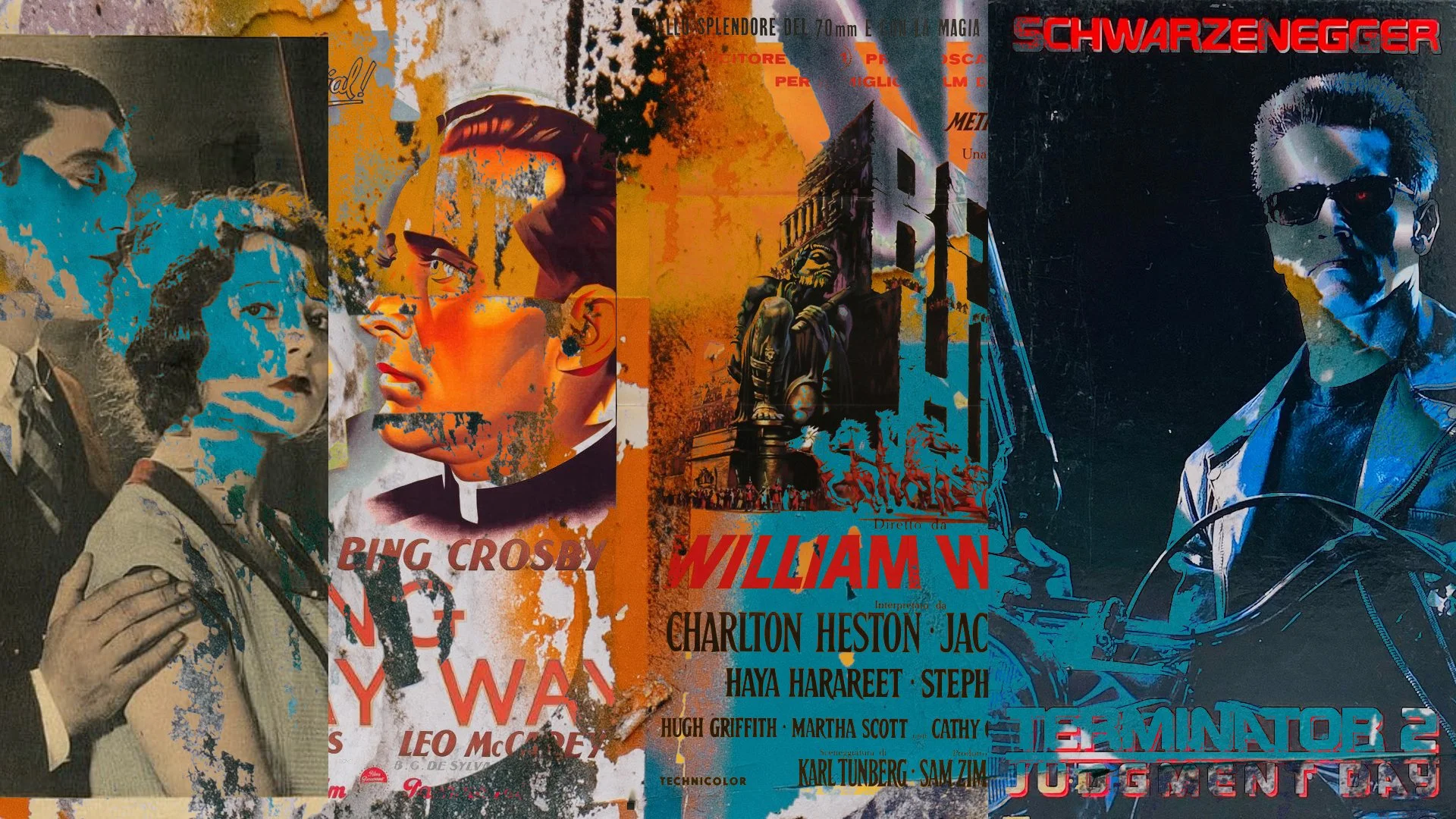
Movies associated with previews at the Alex included Flying Down to Rio, Pennies from Heaven, A Star Is Born, A Day at the Races and Heidi. In 1944, Bing Crosby's Going My Way previewed there. So did National Velvet, with a 12-year-old Elizabeth Taylor. Walt Disney's Hyperion studio was only a few miles away, and Disney cartoons were regularly previewed at the theater.
The Alex wasn't simply exhibiting Hollywood. It was helping Hollywood figure itself out.
And now it gets to do that again.
Only a few years after the Alex opened, audiences were experiencing the next technological earthquake: synchronized sound. The theater adapted. Of course it did. Hollywood always does.
Sound didn't destroy movies. It changed who could make them and how they were made. Some careers ended. Others began. New crafts emerged. New stars emerged. Sound engineers suddenly mattered. Dialogue mattered. Music changed. Acting changed. Directing changed.
The technology didn't simply make silent movies better. It created a different kind of cinema.
That distinction matters enormously right now because we keep asking whether AI will make filmmaking faster and cheaper. That's probably the least interesting question. The real question is whether AI will eventually create forms of cinematic storytelling we haven't invented yet.
Then television arrived and Hollywood panicked again. Why would anyone leave their living room when entertainment was suddenly available inside the house?
Sound familiar?
Hollywood's response wasn't to make movies smaller. It made them bigger. Widescreen. CinemaScope. Stereophonic sound. Spectacle. The Alex installed CinemaScope and surround sound in the 1950s, and films like Ben-Hur filled its marquee.
Once again, technology didn't kill cinema. It forced cinema to evolve.
By the 1970s and '80s, another revolution was underway. Motion-control photography. Computer graphics. Digital compositing. Nonlinear editing. Computer-controlled cameras. Eventually CGI. Movies increasingly became combinations of things photographed and things manufactured.
Then something wonderfully appropriate happened.
In 1991, after more than six decades as a commercial movie theater, the Alex showed its last first-run feature: Terminator 2: Judgment Day.
You couldn't script this better.
A movie about artificial intelligence, featuring one of the landmark digital characters in cinema history, playing in a theater that had opened when movies were silent.
And then, at least for first-run movies, the projector went dark.
Thirty-five years later, movies came home. In 2026, the Alex installed 70mm projection and returned to first-run theatrical exhibition with Christopher Nolan's The Odyssey.
Think about that juxtaposition. In 2026, while Silicon Valley is racing to generate moving images from text, Christopher Nolan is putting enormous images onto physical film.
That's important because the future of cinema isn't necessarily one technology replacing another. It may be something much more interesting.
All of them existing at once.
Film. Digital. Virtual production. CGI. Performance capture. Generative AI.
The artist chooses the brush.
And on October 7 and 8, another technology walks through the doors of the Alex: the inaugural CLOWD AI Film Festival.
Filmmakers from around the world will gather inside this 101-year-old movie palace to watch films created through combinations of human imagination and artificial intelligence. Not on laptops. Not buried in social feeds. Not as fifteen-second demos showing what the latest model can do.
On a movie screen.
Where films belong.
For me, that's the point.
AI filmmaking doesn't become cinema because somebody generates a beautiful shot. We've got billions of beautiful shots. Cinema happens when somebody has something to say.
Character. Conflict. Emotion. Point of view. Taste. Surprise. Human experience.
The technology has changed repeatedly over the last century. Those requirements haven't.
I love the symmetry of 1925 and 2026. In 1925, filmmakers were exploring what motion pictures could become. In 2026, we're doing it again.
John Ford couldn't have imagined CinemaScope. The engineers who invented CinemaScope couldn't have imagined Terminator 2. The artists who created the T-1000 couldn't have imagined generating cinematic images by describing them to a computer. And I'm fairly certain we can't imagine what filmmakers will be doing 25 years from now.
That's what makes this moment exciting.
We're standing somewhere on the timeline.
Not at the end of cinema.
At another beginning.
Maybe that's why holding an AI film festival at the Alex feels so appropriate. This isn't a technology conference room. It's a movie palace. A building designed for the communal act of sitting together in the dark and experiencing somebody else's imagination.
It survived sound. It survived television. It survived widescreen. It survived multiplexes. It survived home video. It survived digital cinema. It survived streaming.
It even survived Terminator 2.
Now AI gets its turn.
And 101 years after searchlights announced the arrival of a new movie palace on Brand Boulevard, another generation of filmmakers is walking through those doors with another new technology.
The tools will change.
They always have.
The screen remains.
So does the audience.
Now tell us a story.
Sources
The Glendale Historical Society — The Alex Theatre, 1925–2025
City of Glendale — Alex Theatre Returns to First-Run Films After 35 Years
About the Author
Curt Doty is a former studio executive and award-winning creative director with deep leadership experience across the entertainment and branding industries. Ten years in Television. Ten Years in Movies.
As the founder of CurtDoty.co, a creative consultancy, Curt has led integrated marketing, multi-channel storytelling, branding, identity, and user experience initiatives for a diverse roster of clients.
Over the past 15 years, Curt has leaned into innovation—leading R&D projects at Apple, Toshiba, and Microsoft, and pioneering interactive content and vertical storytelling.
Today, Curt’s work also explores the intersection of AI and entertainment. A sought-after fractional leader (CCO, CMO), speaker, and AI educator, he focuses on demystifying AI for creatives and executives alike.
Curt is premiering his CLOWD FILM FEST this October. Check it out here and buy your passes.
Curt is a sought-after public speaker having been featured at Mobile Growth Association, Mobile World Congress, App Growth Summit, Promax, CES, CTIA, NAB, NATPE, MMA Global, New Mexico Angels, PRSA, EntrepeneursRx, Digital Hollywood, SHRM, Streaming Media NYC, and Davos Worldwide. Download his speaker press kit here.
Through public speaking, keynotes and podcasts, Curt is continuing his role as a visionary voice in the future of creativity. He is a board member of The Human AI Innovation Commons, Encoding Equity Into AI-Generated Prosperity. A framework for ensuring the innovations arising from Human – AI collaborations benefit humanity broadly, not just corporate shareholders. Curt is also a board member of the Godfrey Reggio Foundation.