AI Won’t Replace You, But Someone Using It Will
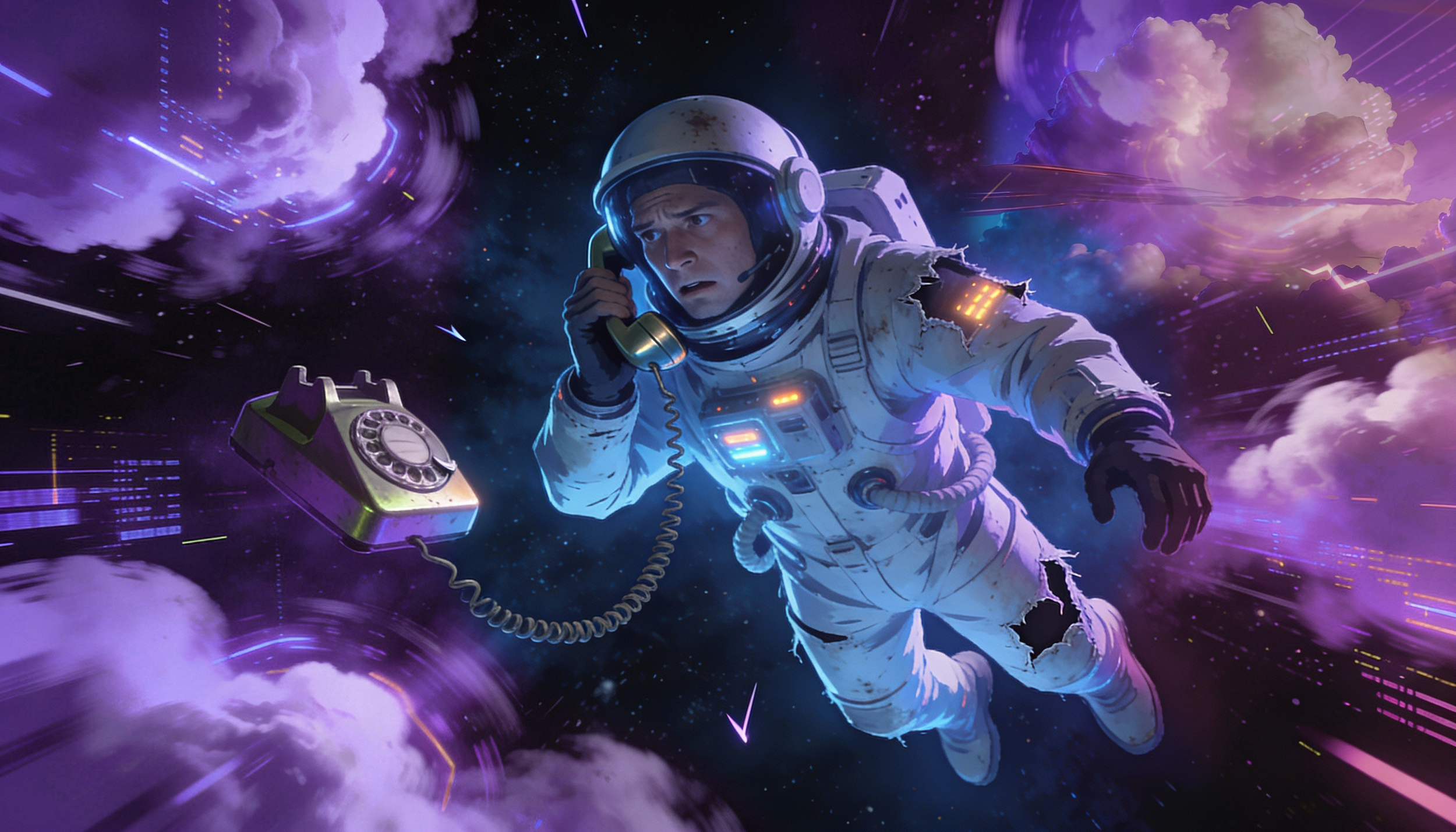
Seedream: Curt Doty
Hollywood’s Wake-Up Call
Welcome to the era where your co-worker isn't just using AI—they are AI. But don’t panic (yet). As Andy Beach, former CTO of Media & Entertainment at Microsoft, puts it, “AI won’t replace you, but a person using AI will”.
That quote alone should be printed out and duct-taped to every screenwriter’s MacBook and studio exec’s forehead. It’s not a threat—it’s a wake-up call.
Andy Beach recently joined me on my podcast RealmIQ: Sessions, and the conversation was like sipping from a firehose of insight. Beach isn’t just a technologist—he’s a seasoned media strategist who’s helped studios and sports leagues navigate AI disruption before most of us knew what ChatGPT was. His verdict? We’re barely scratching the surface of what AI can do in media—and the real disruption hasn’t even begun.
From Tools to Workflows: Where AI Is Headed
Beach laid it out plainly: “We’re still playing with AI... The real shift will happen when these tools are integrated directly into workflows”. Right now, creators are bouncing in and out of apps like ChatGPT or Midjourney like it’s a fun side hustle. But in the near future, these tools will live inside Adobe Premiere, Final Draft, or whatever replaces them. That’s when things get real—and real fast.
The Illusion of Control
A core theme in our chat was control—or more accurately, the illusion of control. AI is already inside the house. Netflix recommendations, voice assistants, closed captions—yep, all powered by AI. “People were highly unaware of where they were already using machine learning,” Beach said. “We’re just consuming it and interacting with it, but we’re not thinking of it as AI”.
Once generative AI exploded into the public consciousness, it felt like we skipped from denial straight to hysteria. The Miyazaki controversy is a perfect example—artists up in arms that their work has been scraped and regurgitated by LLMs without consent. And they’re not wrong.
But as Beach points out, the real issue isn’t the AI—it’s the governance. “We need better implementations around how authors and artists can agree for their content to get used in training,” he said. Right now, it’s the Wild West. The U.S. is behind the EU in terms of policy, and unless we catch up, creators will continue to get steamrolled by tech platforms.
Policy or Pandemonium?
Beach was candid: “Personally, I don’t think we’re into fair use territory by any stretch of how it’s been defined in the past”. This matters. Because while OpenAI and others lobby for laws to make their scraping practices legal after the fact, artists and publishers are still left with no recourse. The solution? Real legislation. Real attribution. Real compensation.
And while DC drags its feet, it’s the states—particularly California—that are taking the lead. But this moment isn’t just about lawmakers. As I said during our talk, “We have choices to make in terms of what platforms we use... and we have voices. It’s time to speak up.”
The Two Bubbles: Valuations vs. Adoption
If you’ve been wondering whether we’re in an AI bubble, the answer is—yes. But Beach draws a smart distinction. There’s the valuation bubble (DeepSeek/Nvidia, anyone?) and the adoption bubble. And the latter? “I don’t see that bubble bursting anytime soon,” Beach said.
People are integrating AI into their workflows, their creativity, their livelihoods. From indies to megacorps, AI is becoming indispensable. And we’re just getting started.
China’s AI Flex: Cheap, Fast, and Scary
Of course, we couldn’t talk AI without bringing up China. DeepSeek’s emergence as a major player jolted the U.S. market—and not just with headlines. “It showed us how fast innovation can move,” Beach noted. China didn’t have the same hardware or funding as Silicon Valley, but they still found a way to train massive models cheaper and faster.
This isn’t just a race—it’s an ecosystem war. And the U.S.? Still playing by yesterday’s rules.
What’s Next: Ethics, Creativity, and the Fight for the Soul of AI
We closed our conversation on the big picture. This is not about eliminating jobs—it’s about redefining roles. “AI will democratize creativity,” Beach said. “But the people who push its boundaries will stand out”.
I’ll add to that: this is the end of average. If your creativity is built on repetition, imitation, or templates—AI will eat your lunch. But if you’ve got taste, vision, and the guts to experiment, AI is your amplifier.
To quote Beach once more: “We’re not done with AI’s innovation bubble. What’s done today will look quaint tomorrow”.
So, to all the writers, directors, designers, producers, and brand folks out there: This is your moment. Not to run from AI—but to run toward it. Be curious. Be vocal. Be visionary.
Because the real threat isn’t AI replacing you.
It’s you not using it.
About the Author
Curt Doty is a former studio executive and award-winning creative director with deep leadership experience across the entertainment and branding industries. Ten years in Television. Ten Years in Movies.
As the founder of CurtDoty.co, a creative consultancy, Curt has led integrated marketing, multi-channel storytelling, branding, identity, and user experience initiatives for a diverse roster of clients.
Over the past 15 years, Curt has leaned into innovation—leading R&D projects at Apple, Toshiba, and Microsoft, and pioneering interactive content.
Today, Curt’s work also explores the intersection of AI and entertainment. A sought-after fractional leader (CCO, CMO), speaker, and AI educator, he focuses on demystifying AI for creatives and executives alike.
Curt is a sought after public speaker having been featured at Mobile Growth Association, Mobile World Congress, App Growth Summit, Promax, CES, CTIA, NAB, NATPE, MMA Global, New Mexico Angels, PRSA, EntrepeneursRx, Digital Hollywood, SHRM, Streaming Media NYC, and Davos Worldwide. Download his speaker presskit here.
Through public speaking, keynotes and podcasts, Curt is continuing his role as a visionary voice in the future of creativity. He is now a board member of The Human AI Innovation Commons, Encoding Equity Into AI-Generated Prosperity. A framework for ensuring the innovations arising from Human – AI collaborations benefit humanity broadly, not just corporate shareholders.