The Studio Is Dead. Long Live the Creator.
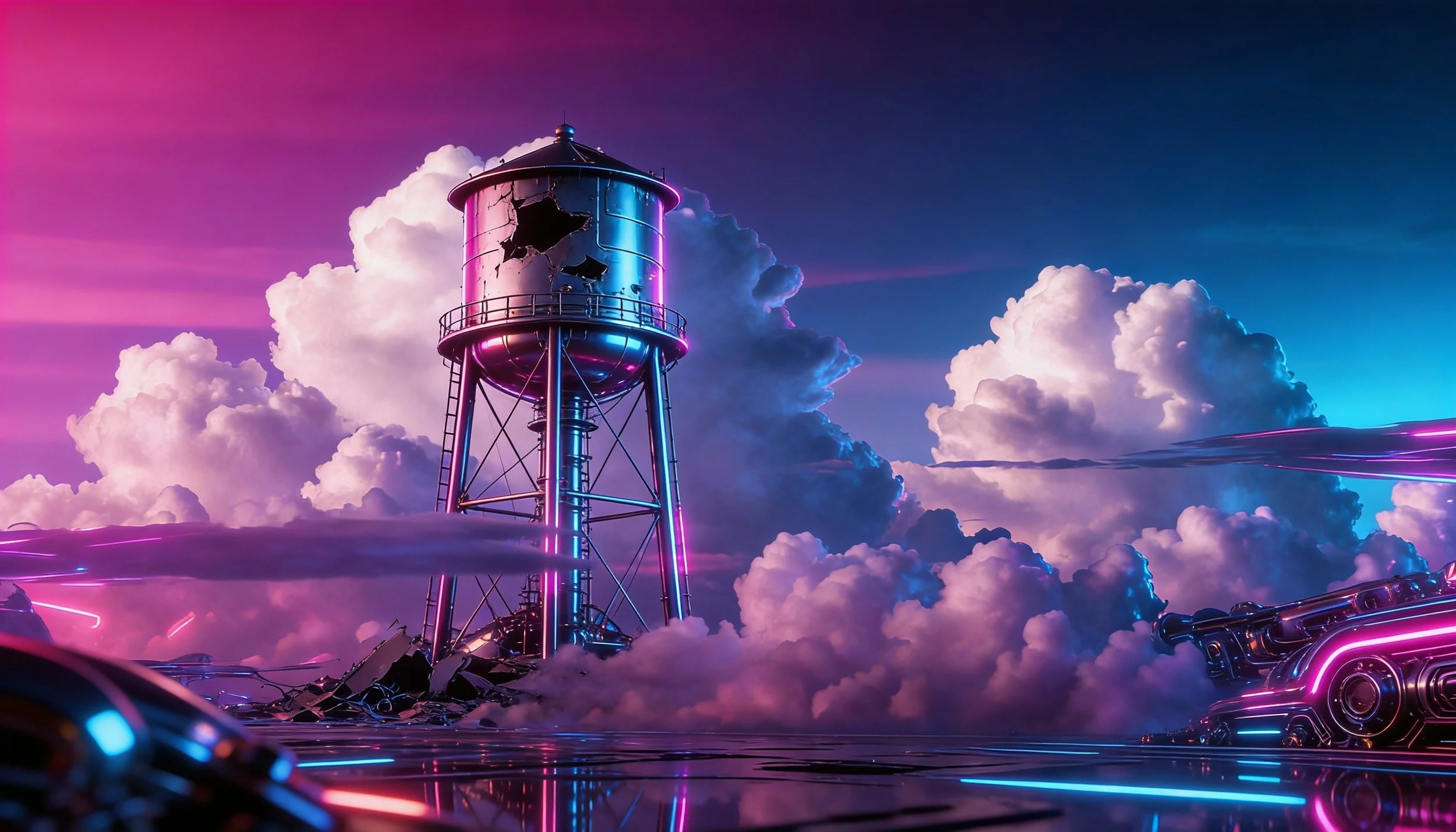
Seedream: Curt Doty
How AI is Dismantling Hollywood’s Monopoly, One Prompt at a Time
There’s a quiet revolution underway in Hollywood—and it’s not coming from inside the studio gates. It’s coming from creators with laptops, open-source AI tools, and zero interest in playing the old game. As Joshua Otten told me in our recent RealmIQ: Sessions interview, “Let’s stop trying to get our movie made by the studios and start making our own movies using these tools”.
Otten isn’t some starry-eyed disruptor. He’s a media entrepreneur with serious IP credentials and an even more serious mission: to decouple storytelling from the studio-industrial complex. His thesis? AI won’t replace artists—it’ll replace studios.
Let that sink in.
The Tools Are Here. The Studios Just Aren’t Ready.
Hollywood’s model is built on scarcity—scarcity of financing, gatekeepers, access. But AI breaks that model. In Otten’s words, “AI is not the enemy—it’s the tool that gives creatives more control over production, IP, and distribution”.
With the rise of generative AI, filmmakers no longer need to pitch, plead, or pray. They can generate storyboards, concept art, voiceovers, and even rough cuts—all without a green light. And we’re not talking about the TikTok fluff that floods social media. We’re talking about high-quality, cinematic work that’s ready for the big screen… or at least, the biggest streaming platforms.
Otten should know. He’s co-founder of Likeness Labs, which offers AI workflows designed for real-world, rights-protected media production. His philosophy? Forget chasing VC money to build yet another AI tool. “The real opportunity is in using open-source solutions to build hybrid workflows that protect IP and scale storytelling,” he told me.
Copyright Chaos and the Hybrid Solution
We both agreed: the copyright debate is a mess. The legal system can’t keep up with the tech, and creators are stuck in a gray zone. Is AI art original? Who owns a voice cloned by ElevenLabs? Can a prompt be copyrighted?
Rather than wait for the Supreme Court to figure it out, Otten suggests a proactive approach: collaboration. “The law is incentivizing hybrid creation,” he explained. “Collaboration isn’t just creative—it’s strategic IP protection”.
By combining human authorship with AI augmentation, creators can carve out legal protection—and more importantly, a defensible claim to originality. This isn’t about faking it with machines. It’s about using AI to elevate the craft, not erase it.
From Commodification to Curation
We also tackled the elephant in the cloud: Big Tech’s commoditization of AI. Meta, Google, Amazon—they’re not here to help artists. They’re here to mine prompts and monetize clicks. “You don’t need to build another model or platform,” Otten said. “You need to own IP. That’s where the real value lies”.
In other words, while Silicon Valley sells you the brush, the gold is still in the painting. The game isn’t building the next Midjourney—it’s in building stories that matter, that resonate, and that you own from prompt to premiere.
Meet the New United Artists
This isn’t just theory. Josh and his collaborators have launched the CLOWD AI Film Festival—a new platform celebrating ethical, hybrid AI filmmaking. No soulless YouTube spam here. Just real creatives using AI as a force multiplier.
It feels like the early days of United Artists. Back then, Chaplin, Fairbanks, and Pickford broke from the studios to control their own work. Today, it’s happening again—only this time, the disruptors are armed with Unreal Engine, VEO3, and ElevenLabs.
Hollywood isn’t being overrun by machines. It’s being outpaced by creators who stopped asking permission.
“Most AI Users Have No Idea How to Tell a Story.”
That was my quote, and I’ll stand by it. Everyone’s obsessed with prompts, but prompts don’t make movies. Stories do. Character arcs. Emotional stakes. Narrative timing. These are the muscles that real filmmakers have been honing for decades.
AI is just another tool. “What brush are you going to use today?” Josh asked. “That’s the real question”.
The point isn’t to automate creativity—it’s to amplify it. With the right workflow, AI can handle the grind (transcription, dubbing, temp VFX) while the human mind handles the spark.
Public Benefit or Platform Play?
We touched on a deeper theme: public good vs. shareholder value. Most tech platforms answer to Wall Street. But creators? We answer to audiences. “The next evolution of media shouldn’t be about extraction,” Josh said. “It should be about benefit—for the creator, the viewer, and the culture”.
That’s why hybrid models matter. That’s why open-source tools matter. That’s why the indie filmmaker using free tools to tell a story about their hometown is more important than the 10,000th Marvel sequel polished by $200 million worth of render farms.
The Revolution Won’t Be Distributed (Yet)
Let’s be honest: this won’t be easy. The legacy players won’t go quietly. Streamers still control distribution. Unions are still adapting. Audiences still expect high polish.
But the cracks are showing. The system is bloated, top-heavy, and out of ideas. Meanwhile, a wave of AI-literate creators is rising—fast, nimble, and fearless.
So here’s the call to arms: If you’re a filmmaker, your strategic advantage is storytelling. Use it. Now. Because the people winning this game aren’t the ones building the platforms.
They’re the ones using them.
About the Author
Curt Doty is a former studio executive and award-winning creative director with deep leadership experience across the entertainment and branding industries. Ten years in Television. Ten Years in Movies.
As the founder of CurtDoty.co, a creative consultancy, Curt has led integrated marketing, multi-channel storytelling, branding, identity, and user experience initiatives for a diverse roster of clients.
Over the past 15 years, Curt has leaned into innovation—leading R&D projects at Apple, Toshiba, and Microsoft, and pioneering interactive content.
Today, Curt’s work also explores the intersection of AI and entertainment. A sought-after fractional leader (CCO, CMO), speaker, and AI educator, he focuses on demystifying AI for creatives and executives alike.
Curt is a sought after public speaker having been featured at Mobile Growth Association, Mobile World Congress, App Growth Summit, Promax, CES, CTIA, NAB, NATPE, MMA Global, New Mexico Angels, PRSA, EntrepeneursRx, Digital Hollywood, SHRM, Streaming Media NYC, and Davos Worldwide. Download his speaker presskit here.
Through public speaking, keynotes and podcasts, Curt is continuing his role as a visionary voice in the future of creativity. He is now a board member of The Human AI Innovation Commons, Encoding Equity Into AI-Generated Prosperity. A framework for ensuring the innovations arising from Human – AI collaborations benefit humanity broadly, not just corporate shareholders.