AI vs. Auteur: Will Hollywood Choose Cheaper Over Better?
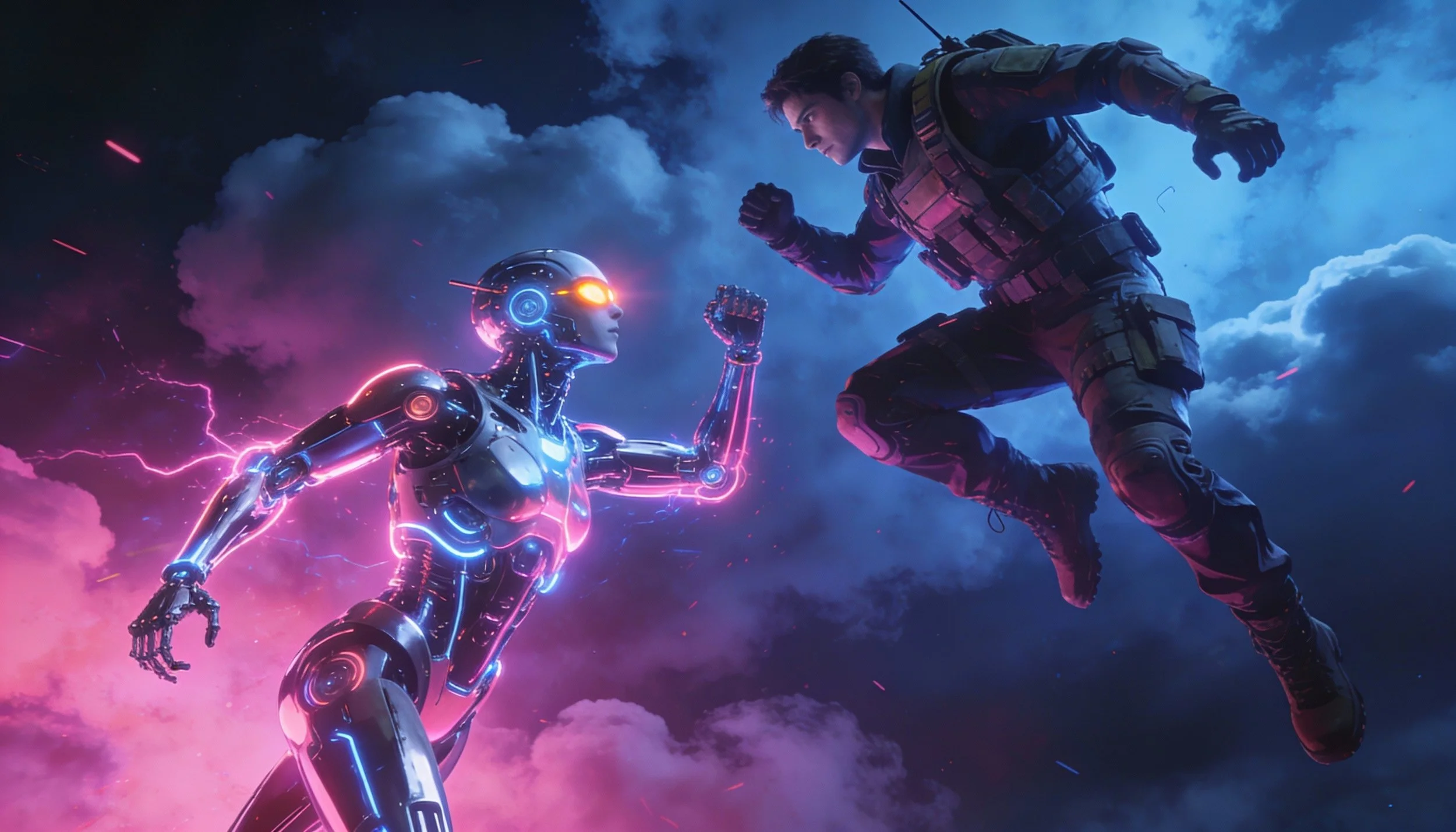
Seedream: Curt Doty
Scott Ross doesn’t pull punches.
The Oscar-winning VFX pioneer and co-founder of Digital Domain (alongside James Cameron and Stan Winston) has lived through multiple waves of cinematic innovation—and disruption. But even for a man who ushered in the digital revolution on films like Titanic, What Dreams May Come, and The Curious Case of Benjamin Button, artificial intelligence hits different.
“This is not just another technology,” Ross tells host Curt Doty on RealmIQ Sessions. “It’s an agent. A game changer at the highest level.”
Ross, who now calls Santa Barbara home and spends his time mentoring, writing, and trying to improve his saxophone chops, has earned the right to speak freely. “I’m not actively employed in VFX anymore. I can tell the truth.”
And the truth is stark: “I would go so far as to say 75% of people employed in VFX today will be replaced by AI”.
Disruption: Not If, But When
For all the handwringing in Hollywood over deepfakes and union strikes, Ross sees AI’s creep as inevitable—and more disruptive than T2’s liquid metal assassin. “Hollywood’s still stuck in fear,” he says. “The rest of the world has moved on.”
Doty sees it too. “Studios are under pressure to make more content, faster and cheaper. AI offers that. But at what cost?”
It’s not just cost-cutting—AI fundamentally reshapes creative labor. Studios already offshored VFX to India and China. Now, AI eats from the bottom up: compositing, rotoscoping, clean-up. Those offshored roles? Toast.
Ross predicts, “AI will slowly eat the visual effects community from the bottom up. Then, it’ll climb the chain.”
And the creative “top” may not be immune. “AI can model Steven Spielberg’s choices. If you’re the studio, wouldn’t you rather deal with the AI than with Steven and his entourage?”
The Stories Still Suck
Despite the hype around AI-generated trailers and short films, Ross isn’t impressed. “The work looks great—but the stories suck,” he says. “There’s no passion. No characters. Just a guy on a horse or a spaceship flying.”
Doty adds, “I’ve seen incredible-looking AI shorts, but they don’t know what to do with the technology. There's no soul in it. And storytelling still requires soul.”
Ross agrees: “Visual effects artists rarely become great directors. Most don’t get character, story arc, emotional resonance.”
Creative-Centered AI or Creative Collapse?
Doty advocates a middle ground: creative-centered AI. “Keep the human in the driver’s seat,” he says. “AI should amplify human creativity—not replace it.”
But Ross remains skeptical. “The financiers don’t care about soul. They care about faster and cheaper. And AI does that better than humans.”
This isn’t just a Hollywood issue—it’s a global shift. Ross references China’s booming market of five-minute user-generated AI videos. “People are chasing followers and monetization. Few will become true storytellers. It’s quantity over quality.”
Still, Doty finds hope in youth. “Younger generations are rejecting screens. They're going back to flip phones. They're ditching alcohol and rediscovering nature. Maybe they’ll reject AI content, too.”
Ross chuckles but offers a reality check: “Try taking an iPad away from an 8-year-old. It's World War III.”
From Digital Revolution to Generative Disruption
Ross’s new book, Upstart: The Digital Film Revolution from T2 to Titanic, documents his journey through Hollywood’s analog-to-digital shift. But even that revolution, he says, pales in comparison to the coming wave.
“I didn’t want to write a business book,” he says. “I wanted to tell the truth. The human toll. The mistakes, the battles, the wrinkles I earned.”
He self-published the book—spending time, money, and emotional energy to get it into the world. “Not sure I’ll ever make that back, but that wasn’t the point. I wanted to set the record straight.”
Doty praises the memoir’s humanity. “It’s about survival in a town that eats its own—and now it’s being devoured by code.”
Final Frame: Who’s in Charge?
So who wins in the battle between AI and auteurs?
“AI may never fully replace the storyteller,” Doty argues. “But it’s already replacing the pipeline.”
Ross isn’t sure creatives can hold the line: “The CFOs aren’t going to choose humanity over efficiency. And AI will learn the skillset of a VFX supervisor faster than any human could.”
Still, both men end on a note of respect—for the art, and the artists still fighting to keep it human.
“Creative-centered AI,” Doty repeats. “That’s the motto.”
TL;DR
AI will gut VFX jobs—starting with offshore, then climbing the chain
AI-generated content looks good but lacks narrative depth
Studios may prefer algorithmic auteurs over real ones
A generational shift may push back against tech saturation
Ross’s memoir Upstart offers a raw, honest account of surviving one revolution—and warning about the next
Watch the full episode on YouTube: RealmIQ Sessions: Scott Ross Interview
Upstart: The Digital Film Revolution from T2 to Titanic is available on Amazon now.
About the Author
Curt Doty is a former studio executive and award-winning creative director with deep leadership experience across the entertainment and branding industries. Ten years in Television. Ten Years in Movies.
As the founder of CurtDoty.co, a creative consultancy, Curt has led integrated marketing, multi-channel storytelling, branding, identity, and user experience initiatives for a diverse roster of clients.
Over the past 15 years, Curt has leaned into innovation—leading R&D projects at Apple, Toshiba, and Microsoft, and pioneering interactive content.
Today, Curt’s work also explores the intersection of AI and entertainment. A sought-after fractional leader (CCO, CMO), speaker, and AI educator, he focuses on demystifying AI for creatives and executives alike.
Curt is a sought after public speaker having been featured at Mobile Growth Association, Mobile World Congress, App Growth Summit, Promax, CES, CTIA, NAB, NATPE, MMA Global, New Mexico Angels, PRSA, EntrepeneursRx, Digital Hollywood, SHRM, Streaming Media NYC, and Davos Worldwide. Download his speaker presskit here.
Through public speaking, keynotes and podcasts, Curt is continuing his role as a visionary voice in the future of creativity. He is now a board member of The Human AI Innovation Commons, Encoding Equity Into AI-Generated Prosperity. A framework for ensuring the innovations arising from Human – AI collaborations benefit humanity broadly, not just corporate shareholders.