We are the Misfits
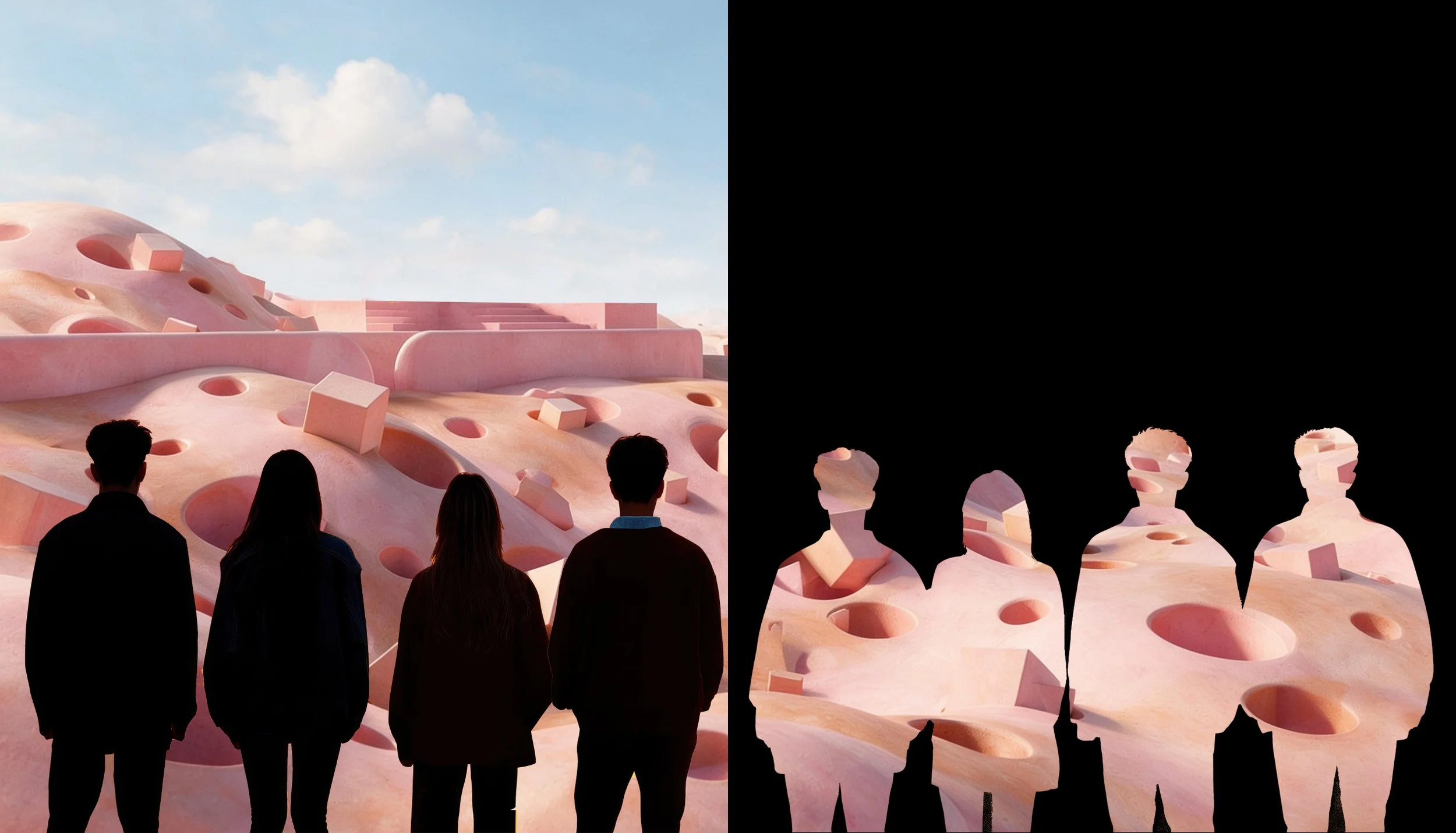
Seedance 5.0/ Adobe Photoshop: Curt Doty
I recently had a conversation with Miles Williams, who is the Artistic Director of the Alex Theatre, where the CLOWD AI Film Festival will premiere in October.
Miles: The Alex is in its 100 years, it opened in 1925. It was designed to be a movie palace. The principal movie palace on the east side of LA. and Walt Disney used to come here. It was the closest theater to his studio. He would come here and do screenings and test screenings of his new cartoons.
It has a long history in cinema, and it was a first-run cinema venue, all the way- Until 35 years ago. the last first run film was Terminator 2 in 1991. And the venue, because it had been under a couple different managements in that big old time period, 65 years of running movies. Including Ben-Hur, we have pictures, historical pictures of Ben-Hur on the marquee, like all these big things, right? And it needed renovating back in the '90s. It was falling apart, like truly falling apart. This happens to these old theaters. I've been in historic theaters for many years, and it does happen to almost all of them, because it takes so much attention to keep something so specialized up and running, and the equipment, the everything.
So, in the '90s, through the redevelopment agency, they were able to put in about 15 million to rebuild the entire thing, essentially. They rebuilt the balcony. They created the mezzanine. We call it the terrace. The seating went from 2,000 down to 1,400.
They lost a bunch of seats in that redo. we've cut it down more down to 1,300 because of tech area needs. Its history as a cinema is well known and beloved by the people of Glendale. Most of the time when I meet new people here, just even walking by, they say they used to come see movies here. So, for the 100th anniversary, rather than just having a party, which a lot of old theaters do, or maybe a special show, I decided to do a season of both live performances, but really the focus of it was what I called, “Century of Cinema.”
And so, we started programing, it was last September 2025, that's the birthday, where we opened with a series of three films from the 1920s in that month. And then month by month, we kept doing three to five films from each decade. So, we did the 1920s and the 1930s, '40s, '50s and so on, until we just finished last month with the whole series of centuries.
I guess it was like something like 30-some films that we did. It's hard to keep all in my head. But that was with the goal of joining the growing, popularity of repertory cinema here in LA. And in particular, on large format film, like the 70 millimeters that we're putting in right now.
I was able to bring in a collaborator who is very well connected. He runs the, IMAX at Universal City. He works with Christopher Nolan directly, developing the actual film footage for his films. And we were able to get this new first run booking, it’s been 35 years. So, we have The Odyssey here this Summer.
The collaborator, Taylor, likes to say that I turned on the “pilot light” with this Century of Cinema series. And it wasn't as well attended, but that wasn't my goal. I wasn't trying to sell them all out. I was just trying to get us back into the mode. Let everyone see in the neighborhood that we're showing movies again.
"Oh, there's movies at the Alex?"
Then we just went for broke, and now we've booked The Odyssey- and we have a full three and a half weeks, I think it's 90 screenings... of The Odyssey, which puts us at 90,000 tickets available in 70 millimeters, and which represents more than 40% of the 70-millimeter available tickets in all of Los Angeles. So, we almost doubled the capacity for the studios to show 70-millimeter large format films, which is amazing. So, putting Glendale back on the map. My background is in music and television, or presentation and television, mostly, in these historic theaters that I've operated.
I realized because of the state of those industries, that the only way the Alex could become a top-tier venue in LA really is through cinema. Which is a reclamation of its original identity. So, we are in the middle of that, and we're going to be a multi-hyphenate venue. Where we do cinema, we do dance, we do music, we do comedy, we do, I always say these "nerd shows." What I actually call them is “misfit shows.” So, the misfit shows are the ones that fit us here. We're available for that. We love that. Most of us who grew up in theaters are misfits. That's why we ended up here.
In the music industry, the performing arts industry, there's a lot of corporate control. You've got giant promoters like Live Nation and Goldenvoice, AEG Presents, Nederlander Presents. What if they don't want you? You're a misfit. What if they don't want to put you on in their venue? What if you don't meet their financial model of success... that the corporate promotion industry does?
If you don't fit that, you're a misfit. But does that mean you don't deserve a place to do a show? You do deserve a place to do a show. Absolutely. If you can bring the audience and what you're doing is worthwhile to people, then, we are that place to come play in Los Angeles.
Curt: I consider the CLOWD AI Film Festival to be a misfit. And I'm sure grateful that you allowed us a venue. Because you're right, these other major chains, they control. and I went to a few of them. They said, "not so much.”. AI is very controversial. But it's really cool, and it's empowering a lot of young and old storytellers who never had the chance to tell their stories. So, we're trying to celebrate those storytellers and give them a chance to move from YouTube to the big screen. Because if you're really saying you're an AI filmmaker, let's create it and show it on the big screen and let that be a test for the audience, because the audience will always decide, what kind of content they want to see. But it has to be given a chance and a spotlight.
Miles: What I believe about the Alex and how I do things here is I say the Alex is for everyone, because everyone does need a chance to have it. I remember being a musician in my early life, and it was, in the early '90s, late '80s, and, at that time, the record labels were gatekeepers.
Because we didn't have computers. We didn't have a way to record. If they didn't sign us, we're not making our record. Now, obviously, the YouTube generation has completely changed that. And computers completely changed that as well, so that you can record your own stuff, both for music from my background or film like yours and for the festival you're doing.
I'm not here to pass judgment. I don't... I do like the egalitarian access to the arts and to the theater. because I don't know, it's like a mission. Where are we as a culture if we can't celebrate creativity? in all forms? When it comes to AI in the arts, certainly there's a big push back from younger generations about not just AI, but all like digital things. All of it. Because of what they've experienced, I think that there's something that we lose in the digital world, but that's what live entertainment's about anyways. That's why we gather.
Curt: But we're also building a community, a networking opportunity, and conversation about it ... so that people can hear both sides, and it's not just industry people in the audience. It will be those who are curious. “What? There's an AI film festival at the Alex?"
Miles: It’s a great discussion to have because, over the years in the arts, all the way back to where, like forever, whenever there were technological upgrades, from photography to CGI, there was disruption.
Photographers were totally shunned. But it became its own art form. Same with CGI.
Curt: Look how well Toy Story 5 did. And that was controversial. Pixar was controversial. It was replacing 2D animation. Beauty and the Beast, they used CGI for the dance scene in the ballroom, and the chandelier was CG and the camera spun around. That was pivotal. And now look where we are.
Miles: People just accept it. And its still artists who are making it and its stories. You can't make it without the stories that are being told. But who wrote the story? Probably a writer. they're just being manifested in different ways.
And I see AI as no different than CG. it's a tool. I think that stuff that's not good... it's not going to be well-received. And there was just an artisanship to the whole thing.
Curt: So, when the technology launched, all the hacks got in and just started experimenting and putting up stuff and creating the “AI slop.” And that's what got to be the norm or where you're going with this. But then when real artisans started to play with the tools, with their decades of craft - suddenly, the technology rises to a new level. And so, the experimenters fade away, and the storytellers rise. And that's where we are. And so, let's give those storytellers an opportunity to share the big screen with their stories.
Miles: I think of us here as being not gatekeepers, but more gate openers, and I think that's an appropriate thing for what this theater should stand for. And when you called me and reached out and what have you, and reached out about doing it, there was a moment like, "Oh, that's going to be controversial. Oh, okay." "Controversy's all right." But I want to be the gate opener. And I did figure you'd probably have trouble also finding a good spot. So certainly, a movie palace. Like this.
Curt: Alot of these AI film festivals popped up all over the world. And they usually rent a hotel- a ballroom. It feels very small and horrible projection. Like a Comic-Con. Let's put it on the big screen in a real theater. See how it plays. And let the audience decide.
Miles: That's one of the things about being in a place like this with all the architectural beauty surrounding the presentation, is that it puts people in a mental space, like an emotional, spiritual space to enjoy it, to be in a receptive mode - to hopefully absorb the storytelling that's going on. Because that's what they expect when they come into these sacred, hallowed halls.
That's why when you go to Burning Man and go to the temple, you can feel it... all the way through you. When you go to these old palaces that were built for entertainment, they were built for gathering people.
I've spent my whole life in places like this, and the attention, the focused attention of 1,000, 1,500, 2,000 people- on the one thing happening. That attention has its own energy. The feelings that can be communal, it’s very similar to, what some religions will get together and people will chant together, or people will witness things together.
Gathering together, we hear the stars talk about it. Chris Nolan obviously is making reasons you have to go to the theater.
This is not a streaming movie. He's making content specifically for the theaters. For the theaters. The fact that we're here at the Alex, like in the zeitgeist on that is very cool. Our next little set of things that we're doing in cinema includes a 60th anniversary of Star Wars. We're doing four films with them. The studio is like doing like a reboot of sorts. So, we've got that coming in September. Labor Day weekend. We then are doing another one of our cool nerd events, which is Mystery Science Theater 3000 30-year anniversary.
One of my heroes is David Bowie on film. And we're going to open with Moonage Daydream, which was the last big, large format documentary of his.
We're doing The Hunger, which he did with Catherine Deneuve, where he played the vampire. That aged really quickly. Amazing films. we're going to end up with The Prestige, where he played Nikola Tesla. Another Nolan film. I think we're doing six or seven in our Bowie series for throughout the year. Now we have the cinema, and we're really going into it, leaning into it. We're going to have an annual sort of celebration of this, director - and do like a series that spreads out through the year.
In Summary, we are elated that Miles is supporting our group of Misfits to share the stage and silver screen at this historical Movie Palace and celebrate the Alex’s next 100 years. Join us in Glendale, CA on October 7 and 8.